Sunday, November 30, 2008

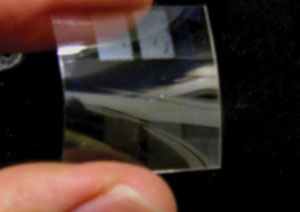
Olympus Wooden Camera


Olympus has created a prototype which employs metal-forming technologies to form wood.  The basic shape is milled out and then compressed, creating a more rigid structure.  We could consider this for the manufacturing of some of the components in our final design.  Additional information can be found here.

and there is also a video describing the process on youtube:

Wednesday, November 12, 2008

60 minutes videos

e-waste
human interaction with computers

HP guidelines for disassembly

No more adhesives.

Use of more metals, which are more easily recycleable than plastics.

Use of plastics families, rather than chemically disparate plastics, such as aromatic-based and olefin-based.

More snap fits.

Clear markings indicating types of plastic used.

“Our view of design for disassembly is very much as it is for the design for assembly,” says Winston A. Knight, professor of industrial and systems engineering at the University of Rhode Island and author of several books on industrial design. “If you concentrate on simplifying the overall product by reducing the number if parts then this has just as much impact on disassembly as it does on assembly.”

Recycled polyethylene from HP printer cartridges is compounded with glass fiber, recycled polyethylene terephthalate (PET) from soda bottles and other materials into a plastic that replaces polycarbonate on a piece that holds the light source on optical scanners. “The structural stability of that piece is very important for optical clarity,” say’s HP’s Frey. It’s not only a good environmental move; the cost of the new compound is less than PC. The recycled material is referred to as RPET.


found this information here

design for the environment + dissasembly

found these guidelines here


manufacture without producing hazardous waste
use of clean technologies
reduce product chemical emissions
reduce product energy consumption
use of non-hazardous recyclable materials
use of recycled material and reused components
design for ease of disassembly
product reuse or recycling at end of life.


Components which are of adequate quality can be refurbished or reused.
Metallic parts can be separated easily into categories which increases their recycling value.
Disassembled plastic parts can be easily removed and recycled.
Parts made from other material such as glass or hazardous material can easily be separated and reprocessed.

Designing for ease of disassembly, to enable the removal of parts without damage.
Designing for ease of purifying, to ensure that the purifying process does not damage the environment.
Designing for ease of testing and classifying, to make it clear as to the condition of parts which can be reused and to enable easy classification of parts through proper markings.
Designing for ease of reconditioning, this supports the reprocessing of parts by providing additional material as well as gripping and adjusting features.
Designing for ease of re-assembly, to provide easy assembly for reconditioned and new parts.

Materials, enabling the disassembled materials to be easily recycled but the principles can apply equally to disassembled parts for Re-manufacture or reuse.
Fasteners and Connections, enabling easy and quick disassembly.
Product Structure, enabling rapid and economic disassembly.

Wednesday, November 5, 2008

Sketches

Chameleon
- modular wallpaper

Creature
- Centralized Brain
- Friendly + compelling
- Multiple Outputs

Cell
- Armadillo
- Reveal / Open
- Light-up parts that are broken etc.
- Modular
- Color Coding

Monday, November 3, 2008

Project Timeline

CMYKreation

Week 1:
- Problem definition

Week 2:
- Continue to define problem
- Sketching
- E-waste Research

Week 3:
- Fixability + Sustainability Research
- E-waste Research
- Sketching

Week 4:
- E-waste Research
- Energy + Material Research
- Emotive / Happiness Research
- Sketching

Week 5:
- E-waste Research
- Energy + Material Research
- Emotive / Happiness Research
- Sketching

Week 6:
- Emotive / Happiness Research
- Model + Prototyping
- Sketching

Week 7:
- Model + Prototyping
- Sketching
- Model Testing

Week 8:
- Model + Prototyping
- Model Testing
- Final Model

Week 9:
- Final Model
- Finalizing Concept

Week 10:
- Finalizing Concept

Monday, October 27, 2008

Field Trip!

Leaving from DAAP blue box at noon on Friday.

We're visiting an e-waste recycling site in columbus

2050 East Williams Road

614.209.4471

Here's the website.

Sunday, October 26, 2008

Print ecology

Whole systems thinking, includes facts such as:


The most recent EPA data show that pulping and papermaking stands second only to oil refining as a producer of nitrogen and sulfur oxides. Printers, meanwhile, take the silver behind big steel's gold standard for carbon-monoxide emissions. Armed with these two facts at your next client meeting, maybe it won't be so hard to get buy-in after all.

EPA's report that airborne emissions account for 99% of the printing industry's toxic releases easily gives atmospheric issues precedence as the foremost print-ecology consideration. Unfortunately, users in a small to medium office setting have relatively few options for safeguarding indoor air quality beyond providing adequate and, if possible, separate ventilation for conventional office printers.

However, one choice stands out far above any other. Originally developed by Tektronix in the early 1990s, Xerox's line of Phaser solid-ink color printers are free of solvents or hazardous chemicals, emit no odors or fumes and generate miniscule amounts of solid waste, unlike typical color lasers. Phasers start at $1,000. Xerox also operates a FreeColorPrinters program, which hinges on participants agreeing to a sole source of ink and minimum monthly usage levels.

And also neat info on inks and papers

Xerox PDF on Sustainability

Super helpful and informative

Dry Toner or Inkjet?

From a website on green printing:

Environmental issues have become key initiatives for print manufacturers, with increasing demand for eco-friendly technologies not only from environmental groups but also progressively more government mandates. Reducing Volatile Organic Compound (VOC) emissions to meet new environmental standards has become a printing industry requirement. Electrophotography's dry toner-based systems do not contain solvents, volatile substances or low molecular weight components, making them far superior to solvent- based inkjet and liquid toner—both with respect to VOC emissions and paper recyclability.

Inkjet technology sees UV inks as a solution for both reducing VOC emissions and addressing the evaporation issues when the ink is in the printhead to prevent nozzle clogging. However, UV light increases the energy consumption during printing, and the reactive type of chemicals used in these inks create safety concerns for operators and service engineers. Depending on the type of end-user application, special safety precautions have to be taken (e.g. in printing material for food applications).

UV inks continue to have issues with respect to the deinkability behavior. During the recycling process, repulping causes UV-curable and liquid toner inks to become ink specks—too large to be removed by flotation and too elastic to be removed by screening. When looking at pigmented inkjet inks, the flotation process doesn't work as well because the particles are too small to be removed. Dry toners, used for digital color printing processes, are widely accepted as deinkable. — Dr. Lode Deprez, VP Toner Development Group for Xeikon unit at Punch Graphix

Sustainabl(er) printing

A good PDF on sustainable printing.

Thursday, October 23, 2008

sheep poo paper


not kidding.

Solid Ink


A good and comprehensive article on Solid Ink printing.

Synthetic Paper


Completely recyclable (made of #5 plastic Polypropylene), this is the same "paper" that was used for the book Cradle to Cradle.

Yumo makes it for the consumer and printing press market.

We'll have to think carefully about the proper inks to use on this paper. But I think we can probably come up with something that allows us to reuse the paper and inks indefinitely within the office.

Bamboo Casing


These computers by Asus use bamboo casings.

Xerox Disappearing Ink Paper


Xerox's disappearing ink via cnet

The paper is coated with photosensitive chemicals that turn dark when hit with UV light.

Users don't have to wait for the paper to fade- by running it through the special printer made for this paper, the printer will erase the old image before putting the new one on. The special paper can be run through the printer roughly 100 times.

Xerox says that 44.5 percent of documents are printed for one-time use and 25 percent of all documents printed get recycled the same day.

It takes about 204,000 joules to make a sheet of paper, Shrader said. That's about the same amount of power required to run a 60-watt light bulb for an hour, he added. Recycling that same sheet of paper takes about 114,000 joules.
Printing a conventional 8x11.5 sheet of paper takes about 2,000 joules, he said.
Reusable paper takes a lot less effort. It only takes 1,000 joules to print an image on one of Xerox's reusable sheets of paper, and that's if you use the printer to erase the image. If you let the image fade naturally, it only takes about 100 joules to print.

After you've used it 100 times, I don't know if this special paper can be recycled or not.

Wednesday, October 22, 2008


*click image for higher res photo.

Samsung National Recycling


So Samsung has a national recycling program!

They have a take-back location for their electronics at 3650 Brookham Drive, Grove City, OH 43123 (614-871-1456) - basically Columbus.

Samsung also has a toner take-back program. The program uses FedEx and is free for consumers.

Green Materials Website


Cool site for sustainable materials...

Here is an image link to a material:
a 100% recyclable polyethylene produced
using sugarcane.

Some E-waste facts and figures


This PDF contains some helpful data on amount/distribution of e-waste.

Unsurprisingly, most e-waste is generated in affluent countries and then exported to India, China, and other Asian countries (with China receiving 90% of the waste stream).

Other interesting facts- most US consumers have two to three obsolete computers in their garages or storage space. The US is one of the only countries in the world that has not yet ratified the Basel Ban (which requires countries not to export e-waste to other members of the treaty.)

Biopolymer/biodegradable plastic


"This material is the biopolymer
application of Miscanthus combined
with colza oil as a highly biodegradable
plastic. The photos on this page show
an example of a biodegradable flower pot."

"Benefits of the Miscanthus as a raw material:

- high capacity of sound absorption
- good thermal insulation
- 100% chemical free

- 80% weight reduction compared to concrete

Organic Polymer Electronics


This article explains quite a bit about organic polymer electronics. I think we should probably incorporate this technology into our final concept.

Wednesday, October 15, 2008

Wednesday, October 8, 2008

Presentation for Monday

Viewpoint: 
How does a scribe live + die?

Strategy:
micro- emotion
macro- sustainability

Research:
Emotional
1. Anti-Ninja Scribe 
- organic forms
- form research
- living images + objects to evoke reactions
2. Interaction
- create user interaction profiles
- brainstorm / "Designing Interactions"
- Focus group, ask about technology and what makes users happy
3. Emotional Metrics
4. Dogs
- how do non-humans understand and interact with humans

Sustainable
1. E-Waste
- how are electronics disposed of?
- follow journey of an old printer
2. Diagram system 
- research system around current printers
3. Focus Group
- Why are people afraid to fix things? How can printer's become "fixable"
4. Energy Usage and Material Usage
- gather data and statistics

Ideation
- sketching
- 3D ideation- clay
- collage
- computer sketching

Models
- 3D clay
- rapid prototyping
- fabric over wires
- repurposed models
- r2-d2 model to study human printer interaction

Model Testing
- focus groups
- "practical joke" an office of unsuspecting employees

Final Concept
- That's the question isn't it. . .

Links for current thermal printer technology

http://news.bbc.co.uk/1/hi/technology/6174052.stm

http://www.pcauthority.com.au/News/69312,xerox-turns-to-reusable-printer-paper.aspx

http://www.pcpro.co.uk/news/98491/toshiba-rewrites-printer-rules-with-reusable-paper.html

Monday, October 6, 2008

Printer Frustrations


Just testing out my posting abilities... User research! A user's solution to those frustrating printer issues.

link for solid ink

http://www.office.xerox.com/solid-ink/enus.html

Wednesday, October 1, 2008

images from 10.1.08


images from class 9.29.08


blog is launched.

yay! got things up and running. going to style it a bit and then start posting images.